The Future of Authentication with WebAuthn and why it Trumps Traditional Password
By Wabnev, Published on November 5th 2024 | 4 mins, 638 words
In today's digital landscape, security is a top concern for web applications. Traditional password-based authentication has been the norm for decades, but its limitations and vulnerabilities have become increasingly apparent. Enter WebAuthn, a game-changing authentication protocol that offers unparalleled security and convenience. In this article, we'll delve into the benefits and drawbacks of WebAuthn, exploring why it's a superior alternative to traditional passwords and why web applications should adopt it as a critical security feature.
What is WebAuthn?
WebAuthn is a web standard that enables strong, secure, and user-friendly authentication. It leverages hardware security tokens, such as fingerprint readers, facial recognition cameras, or security keys, to authenticate users. By eliminating the need for passwords, WebAuthn significantly reduces the risk of unauthorized access.
The Pitfalls of Traditional Passwords
Password-based authentication has been the standard for web applications, but it's plagued by several issues:
- Password fatigue: Users struggle to remember multiple complex passwords, leading to password reuse and weakened security.
- Brute-force attacks: Hackers employ automated tools to guess passwords, exploiting weak or commonly used passwords.
- Phishing: Users are tricked into revealing passwords to malicious parties.
- Password storage vulnerabilities: Stolen or compromised password databases expose user credentials.
Key Benefits of WebAuthn
- Passwordless authentication: Users no longer need to remember complex passwords, eliminating password-related vulnerabilities.
- Public key cryptography: WebAuthn uses asymmetric cryptography, ensuring that only the user's device can access their private key.
- Biometric authentication: Integrates with device-based biometrics (e.g., fingerprints, facial recognition) for added security.
- Phishing resistance: WebAuthn's cryptographic handshake prevents attackers from intercepting or mimicking user credentials.
- Improved user experience: Streamlined login processes reduce friction and enhance user satisfaction.
- Better security: WebAuthn's cryptographic protocols provide robust protection against various types of attacks.
How WebAuthn Works
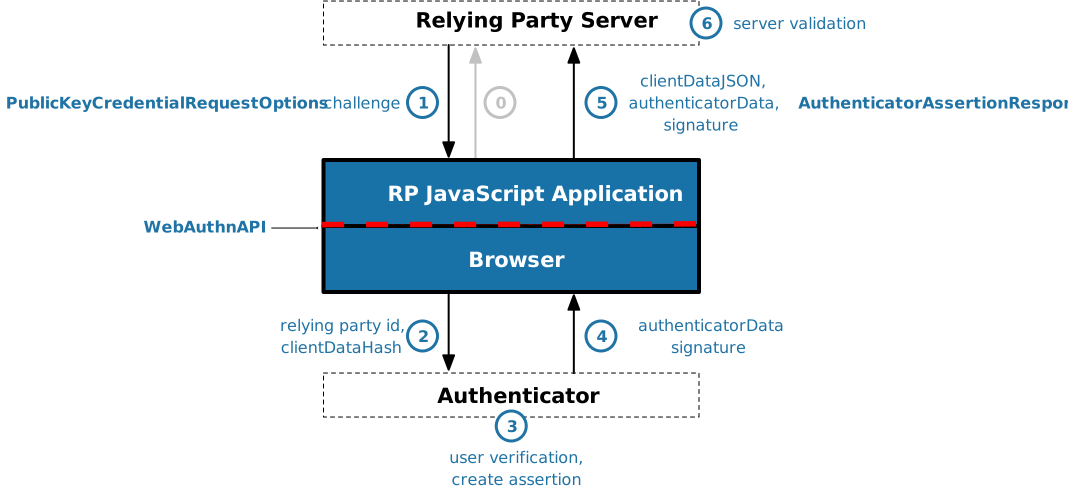
WebAuthn's authentication process involves the following steps:
- Registration: Users create a WebAuthn credential on their device, generating a public-private key pair.
- Authentication: When logging in, the web application requests authentication, triggering the device to use its private key to sign a challenge.
- Verification: The web application verifies the signed challenge, ensuring the user's identity.
Negatives and Limitations of WebAuthn
While WebAuthn offers significant advantages, it's not without limitations:
- Compatibility: WebAuthn requires compatible browsers and devices, which may limit adoption.
- User education: Users may need guidance on setting up and using WebAuthn.
- Key storage: Secure storage of private keys is crucial; compromised key storage can undermine WebAuthn's security.
- Backup and recovery: Users may struggle to recover their credentials if their device is lost or compromised.
- Interoperability: WebAuthn may not integrate seamlessly with existing authentication systems.
Why Web Applications Should Adopt WebAuthn
Despite its limitations, WebAuthn's benefits far outweigh traditional password-based authentication:
- Enhanced security: WebAuthn provides robust protection against phishing, brute-force attacks, and password theft.
- Improved user experience: Passwordless authentication streamlines login processes, reducing friction and enhancing user satisfaction.
- Regulatory compliance: WebAuthn aligns with emerging regulations, such as GDPR and PSD2, emphasizing strong authentication.
- Future-proofing: WebAuthn's adaptability ensures it will remain effective against evolving threats.
Implementing WebAuthn in Your Web Application
To integrate WebAuthn into your web application:
- Choose a compatible library: Select a reputable library, such as WebAuthn.js or python-webauthn.
- Implement registration and authentication: Follow WebAuthn's API guidelines to integrate registration and authentication flows.
- Ensure secure key storage: Implement robust key storage and backup mechanisms.
- Test and iterate: Thoroughly test WebAuthn integration and iterate based on user feedback.
Conclusion
WebAuthn revolutionizes authentication, offering unparalleled security, convenience, and regulatory compliance. While it presents some challenges, its benefits make it an essential security feature for web applications. By adopting WebAuthn, developers can: Protect users from phishing and password-related vulnerabilities; Enhance user experience with; passwordless authentication; Future-proof their applications against emerging threats; Align with regulatory requirements
As the digital landscape continues to evolve, WebAuthn is poised to become the new standard for authentication. Embracing this cutting-edge technology will position your web application at the forefront of security and innovation.
Additional Resources